

From Aging to Thriving:
Redefining the Dining Experience
SAS White Paper Series
Not Your Parents’ Retirement: How Baby Boomers Are Reshaping Senior Living Culinary Programs (Part 2)
How the next wave of residents is transforming dining from a daily obligation into a cornerstone of community life, and what architects, operators, and developers must do to keep pace.
In Part 1 of this series, we explored how Baby Boomers are fundamentally reshaping apartment design in senior living communities, demanding larger units, smart home technology, and deeply personalized experiences. But if there is one amenity that perhaps most powerfully reflects the values of this generation, and one that will most directly define whether a community succeeds in attracting and retaining residents, it is dining.
Food is culture. Food is community. Food is identity. And for the generation that grew up during the American food revolution of the 1960s and 70s, that experienced the rise of global cuisines, the farm-to-table movement, the Food Network, and a lifetime of dining at some of the country’s finest restaurants, the institutional “three hot meals a day” model simply will not do.
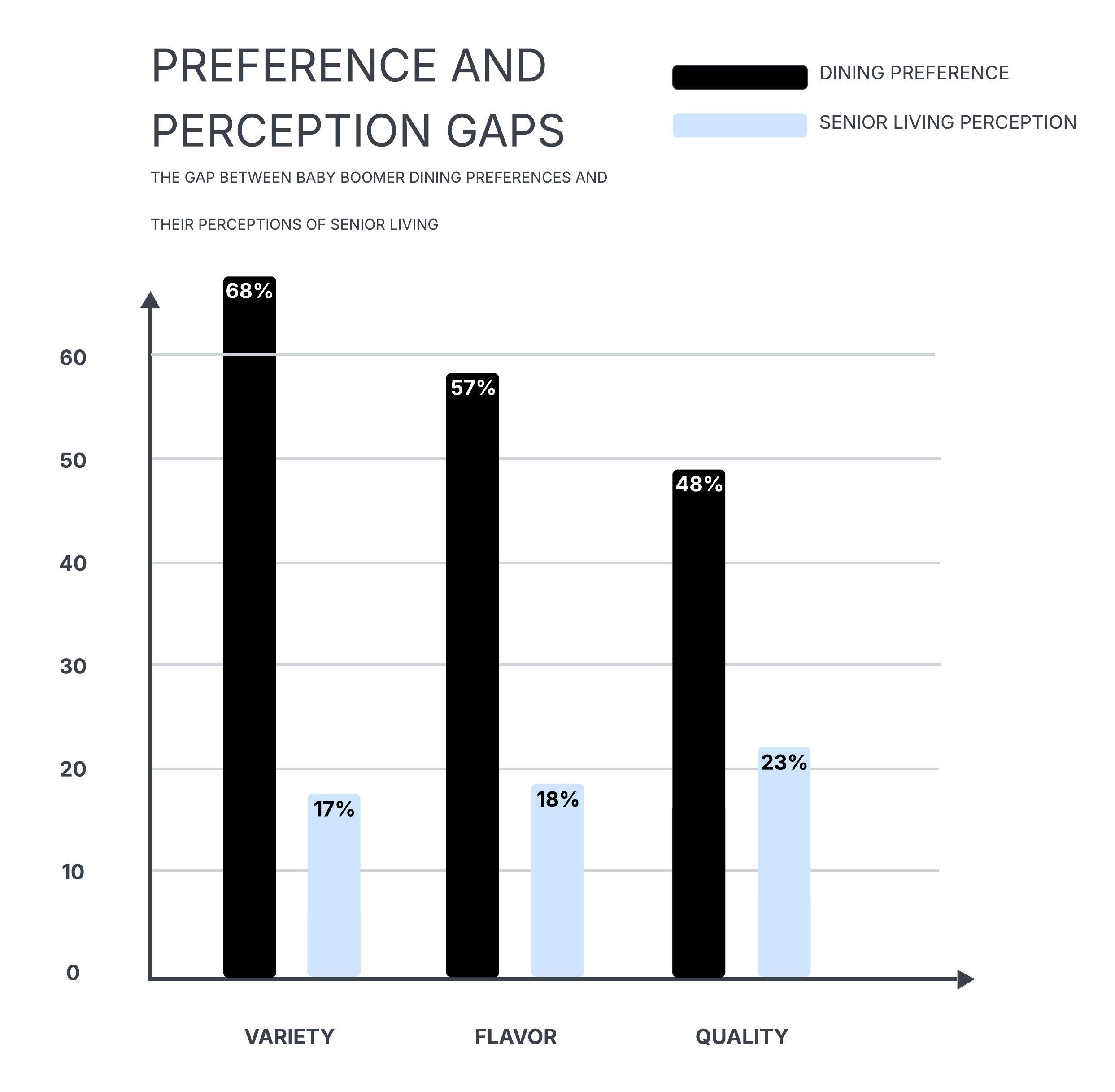
The data is striking. A 2024 survey by Restaura of 1,485 adults aged 55–96 found that 68% look for variety in meal options that cater to their individual tastes, yet only 17% are very confident that senior living communities can deliver the dining variety they expect. Perhaps most telling: when respondents were asked what words they associate with senior living, restaurant-quality food ranked near the bottom , selected by just 11% of respondents. (1. Restaura / Age of Majority, “Great Expectations” Survey, October 2024)
That gap, between what Boomers expect and what the industry currently delivers, represents one of the greatest design and operational opportunities in senior living today. Closing it requires rethinking not just what is served, but how, where, and when it is served, and what spaces make all of it possible. This article explores how to approach the design of Senior Living’s dining amenities in a way which can differentiate your community and improve the experience of a new generation of Seniors.
The Stakes: Why Dining Is the Heartbeat of a Senior Living Community
Before examining the design response, it is worth understanding what is at risk when dining programs fall short and what becomes possible when they excel.
The J.D. Power 2025 U.S. Senior Living Satisfaction Study found that the year-over-year increase in assisted living satisfaction was driven primarily by improvements in dining, ahead of resident activities and apartment quality. (2. J.D. Power, 2025 U.S. Senior Living Satisfaction Study, November 2025) Study after study confirms that residents and families who are satisfied with their dining experience are more satisfied with the organization overall and far more likely to recommend their community to others. (3. McKnight’s Long Term Care News, “Improving Dining Environments Increases Resident Satisfaction”) A high-quality dining program is, in short, both a retention tool and a marketing instrument.
The stakes extend beyond satisfaction scores. Dining is one of the most powerful antidotes to what public health researchers have identified as one of the greatest health threats facing older adults: social isolation. According to the National Academies of Sciences, Engineering, and Medicine, approximately one in four Americans aged 65 and older are considered socially isolated, a condition linked to a 30% increased mortality risk, and health consequences comparable to smoking 15 cigarettes per day. (4. National Academies of Sciences, Engineering, and Medicine, “Social Isolation and Loneliness in Older Adults,” 2020; Hopkins Bloomberg Public Health Magazine, 2024)
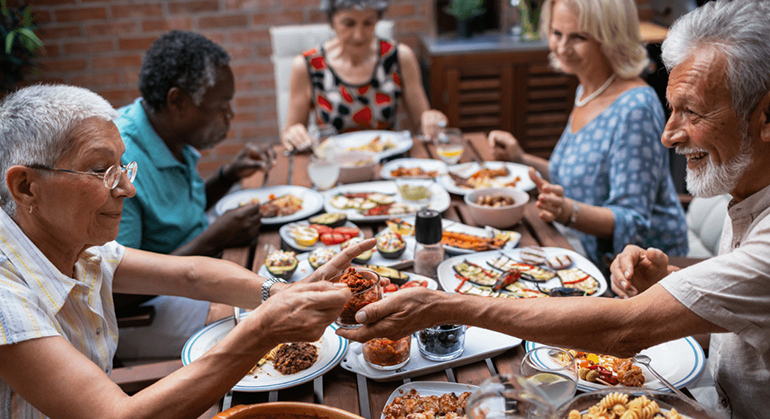
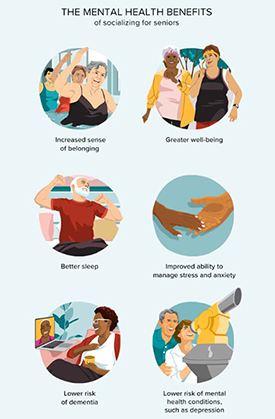
Against this backdrop, the communal dining table is not merely a place to eat. It is an intervention, a daily opportunity to foster connection, belonging, and purpose. As communities begin to accommodate the Baby Boomers’ preference for in-room dining, to-go ordering, and third-party delivery apps, the design challenge becomes not just logistical, but deeply human: how do we build flexibility into the dining program without inadvertently accelerating the retreat from community life?
The answer lies in designing experiences so compelling, and environments so inviting, that residents choose to show up.
Understanding the Baby Boomer Palate and Mindset
Baby Boomers are the most culinarily sophisticated generation to enter senior living. They have cooked from Julia Child, traveled internationally, frequented farmers markets, and watched decades of food television. They are health-conscious and more likely than previous generations to track nutritional content, manage chronic conditions through diet, and seek out fresh, locally sourced ingredients. (5. NIC, “Adapting to Changing Consumer Preferences: A Boomer’s Perspective,” June 2024)
The 2024 Restaura survey found that when choosing how they dine, 65% of Boomers prioritize flexibility and the ability to prepare their own meals, dine out, or order takeout over access to multiple dining venues. (1. Restaura / Age of Majority, “Great Expectations” Survey)
What Boomers want, broadly, is the dining freedom they currently have at home, on their own schedule, with their own food preferences, without compromise, delivered within a community setting that also offers exceptional communal programming when they want it. Meeting both needs simultaneously, in the same building, is the central design challenge.
The Design Response: Rethinking the Dining Ecosystem
Goodbye, Grand Dining Room. Hello, Village of Venues.
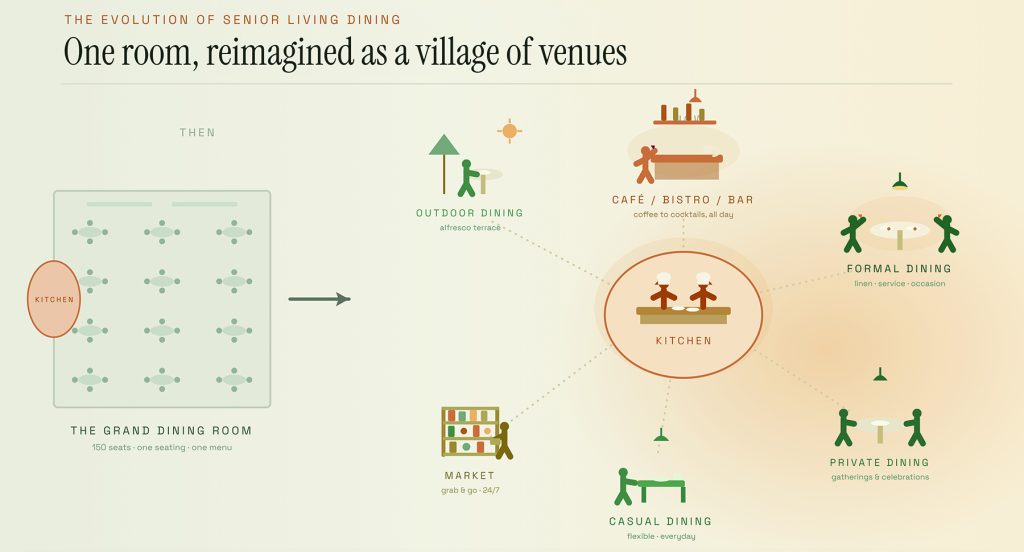
The institutional model of the senior living dining room, a single large space, one seating time, one menu, is incompatible with the Boomer expectation. Gone are the days where a resident must eat at 5:30 PM in a cavernous room with 150 neighbors.
In its place, a new model is emerging: a village of smaller, differentiated venues that collectively serve the community across every meal period, every mood and every occasion. Rather than one monolithic dining room, progressive communities are developing ecosystems of complementary spaces, each with its own atmosphere, function, and culinary identity, that can flex throughout the day.
Key design principles for this new model include:
- Scale down and turn up the charm. Smaller dining rooms (30 to 60 seats rather than 150) create a more restaurant-like atmosphere, reduce ambient noise (a meaningful accessibility consideration), and allow for a more personalized service experience. Where large-scale rooms are retained or required, they benefit from architectural strategies that break the space into smaller “neighborhoods” through millwork, lighting, ceiling treatments, and moveable partitions.
- Multi-functional venues that transition across the day. The most cost-effective and space-efficient model is the all-day venue, a bistro/café/bar hybrid that serves coffee and pastries in the morning, light lunch through midday, cocktails and charcuterie by late afternoon, and transitions to a casual dining backdrop in the evening. This single venue can replace multiple purpose-built spaces while providing a more dynamic and socially activating environment.
- Flexible indoor-outdoor connections. Baby Boomers bring an expectation of alfresco dining shaped by decades of restaurant culture. Connecting dining venues to accessible outdoor terraces, with the appropriate shade, heating, and weather protection, can dramatically extend the usability of the space and the perceived quality of the experience.
- Eliminate the cafeteria aesthetic entirely. Finishes, furnishings, lighting, and acoustic design should reference the best of contemporary hospitality, not healthcare. The shift from fluorescent light to warm pendant fixtures, from vinyl tile to hardwood, from laminate tables to linen-set dining, from buffet lines to exhibition cooking, each of these choices communicates whether a community has truly made the investment in dining as an experience.
The Rise of the Bistro/Bar: Programming Across the Day
Perhaps no single venue typology better captures where senior living dining is headed than the multifunctional bistro/café/bar. This hybrid space, drawn directly from the hospitality and multifamily residential sectors, serves as the social heart of the community across the entire day.
In the morning, it functions as a coffeehouse, with specialty drinks, fresh pastries, and flexible seating for casual meetings or solo reading. By afternoon, it becomes a light-fare café offering salads, sandwiches and charcuterie. As the evening approaches, the atmosphere transitions to a wine bar or cocktail lounge.
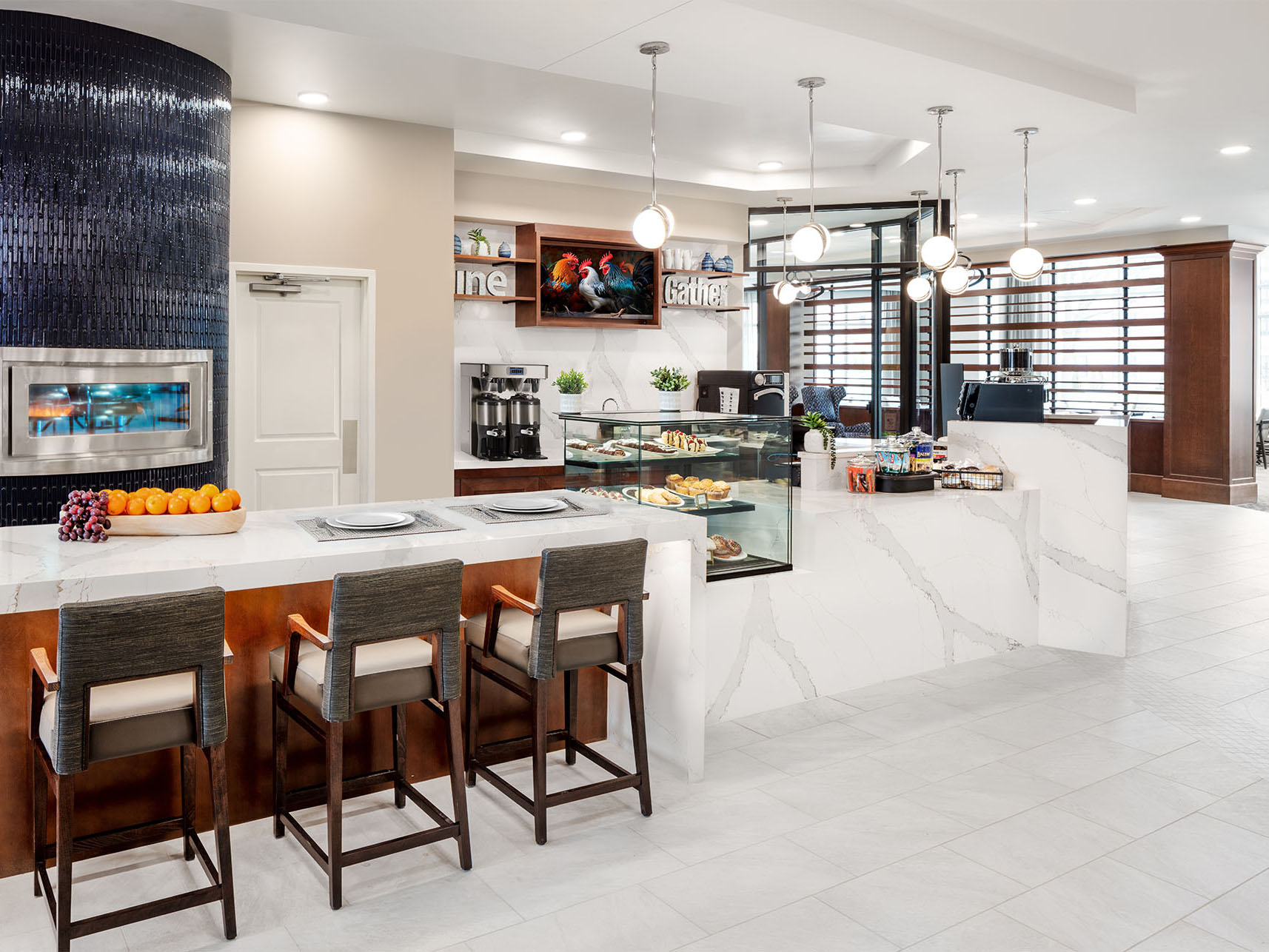
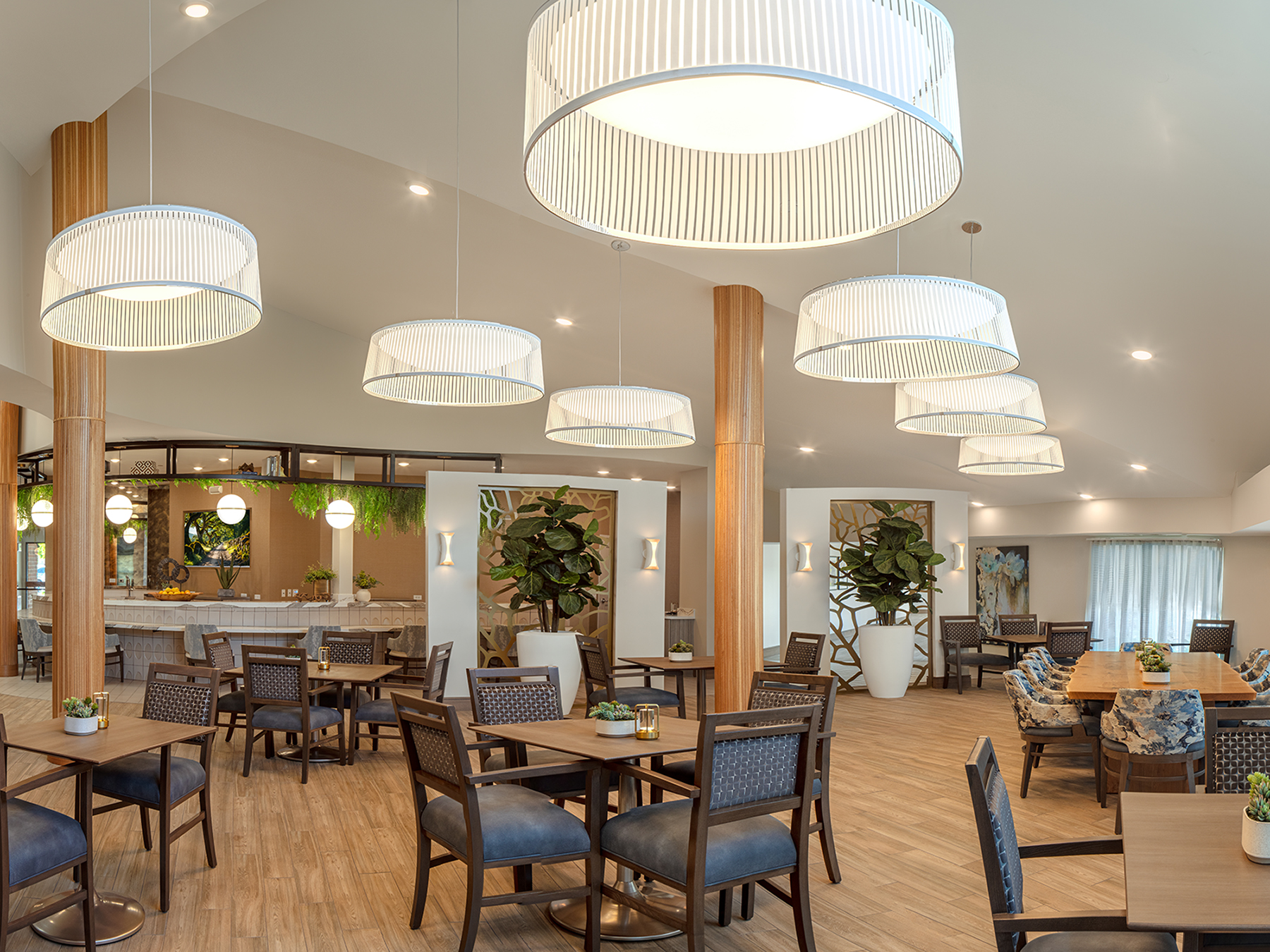
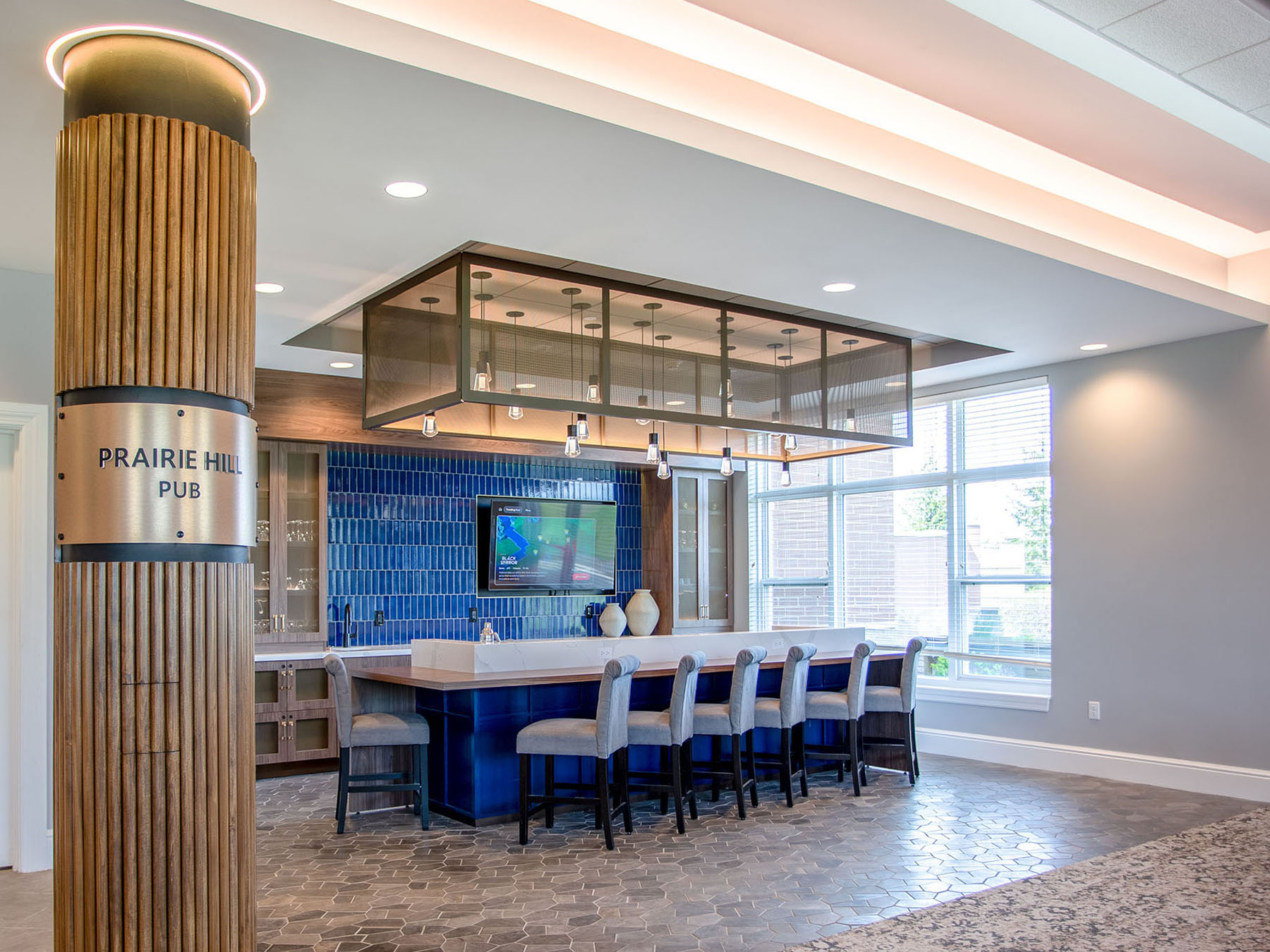
The programming possibilities of this space are significant. Happy hours should no longer default to Miller Lite and two house wines. Forward thinking communities are offering curated wine and craft beer tastings with food pairings, guest sommeliers and brewery collaborations, generating additional revenue while creating memorable, shareable experiences. Chef’s table evenings, live cooking demonstrations, specialty cuisine nights representing different global culinary traditions, and collaborative dinners with local chefs or food trucks extend the programming calendar and give residents something to look forward to throughout the month.
These experiences matter precisely because they are the antidote to isolation and give residents a reason to leave their apartments, to invite families and to make new friends across a shared love of food and discovery.
Expanding the Culinary Programming Calendar
The most forward-thinking operators are building robust programming ecosystems around the dining experience. SAS Architects encourages clients to think beyond the menu and toward a full culinary calendar that might include:
- Specialty dining nights – Rotating cultural cuisine nights, from Italian Sunday supper to Japanese omakase, that bring variety and a sense of exploration to the dining calendar
- Chef’s table experiences – Intimate dinners with a front-row view of the kitchen, offering an experiential premium for special occasions or resident birthdays
- Interactive cooking classes and demonstrations – Inviting residents not just to eat, but to participate, drawing on the culinary curiosity that defines this generation
- Farm-to-table connections – Partnerships with local farmers markets and community gardens that connect food directly to its source and provide additional programming hooks
- Aquaponic and vertical garden integration – On-site growing systems that can supplement produce supply, reduce reliance on supply chains, offer year-round growing capacity, and provide residents with meaningful engagement in tending the garden that feeds them, all produced in a compact growing area
- Outside chef and restaurant collaborations – Pop-up dinners featuring guest chefs from local restaurants, food truck partnerships, and seasonal culinary events that bring outside energy into the community
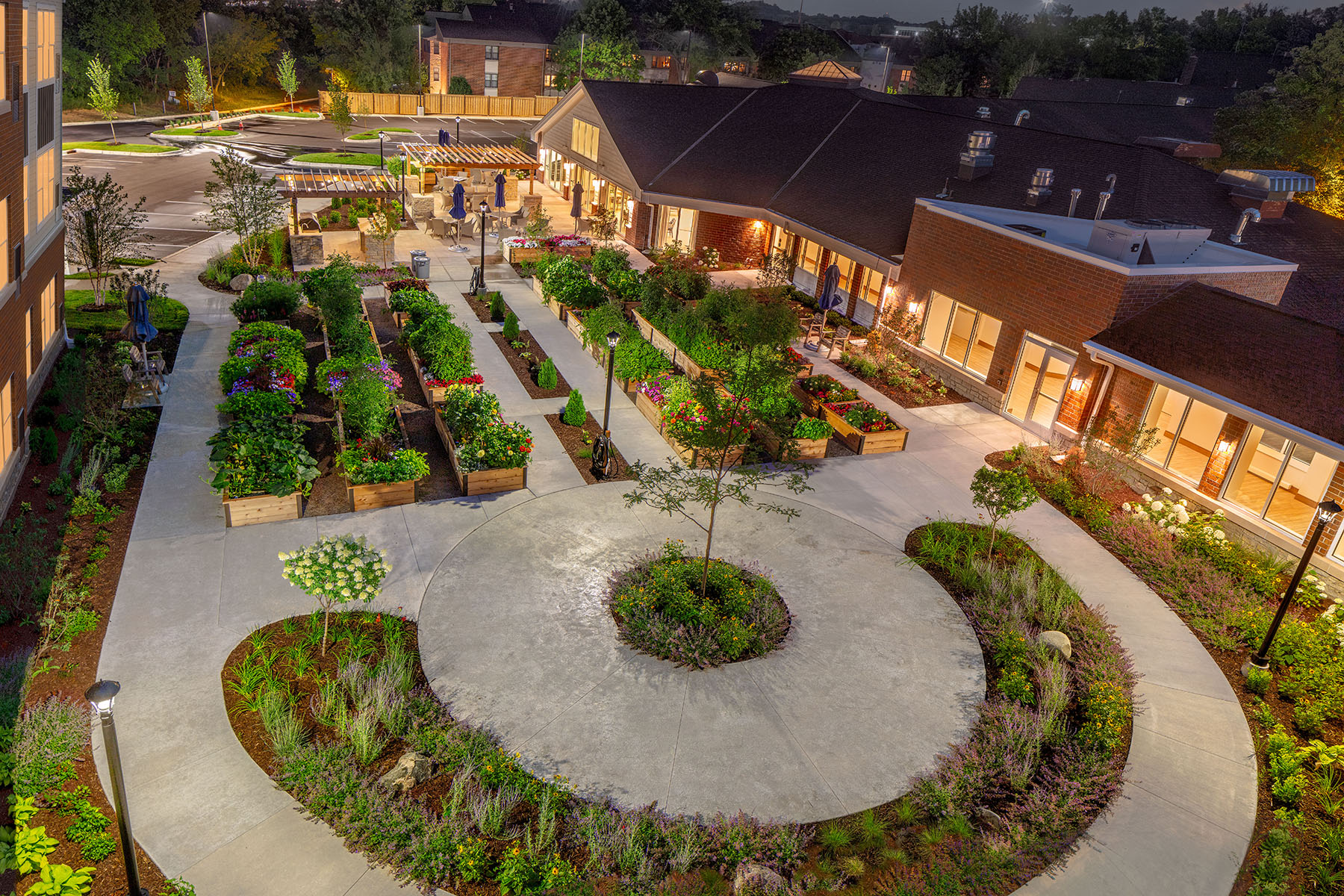

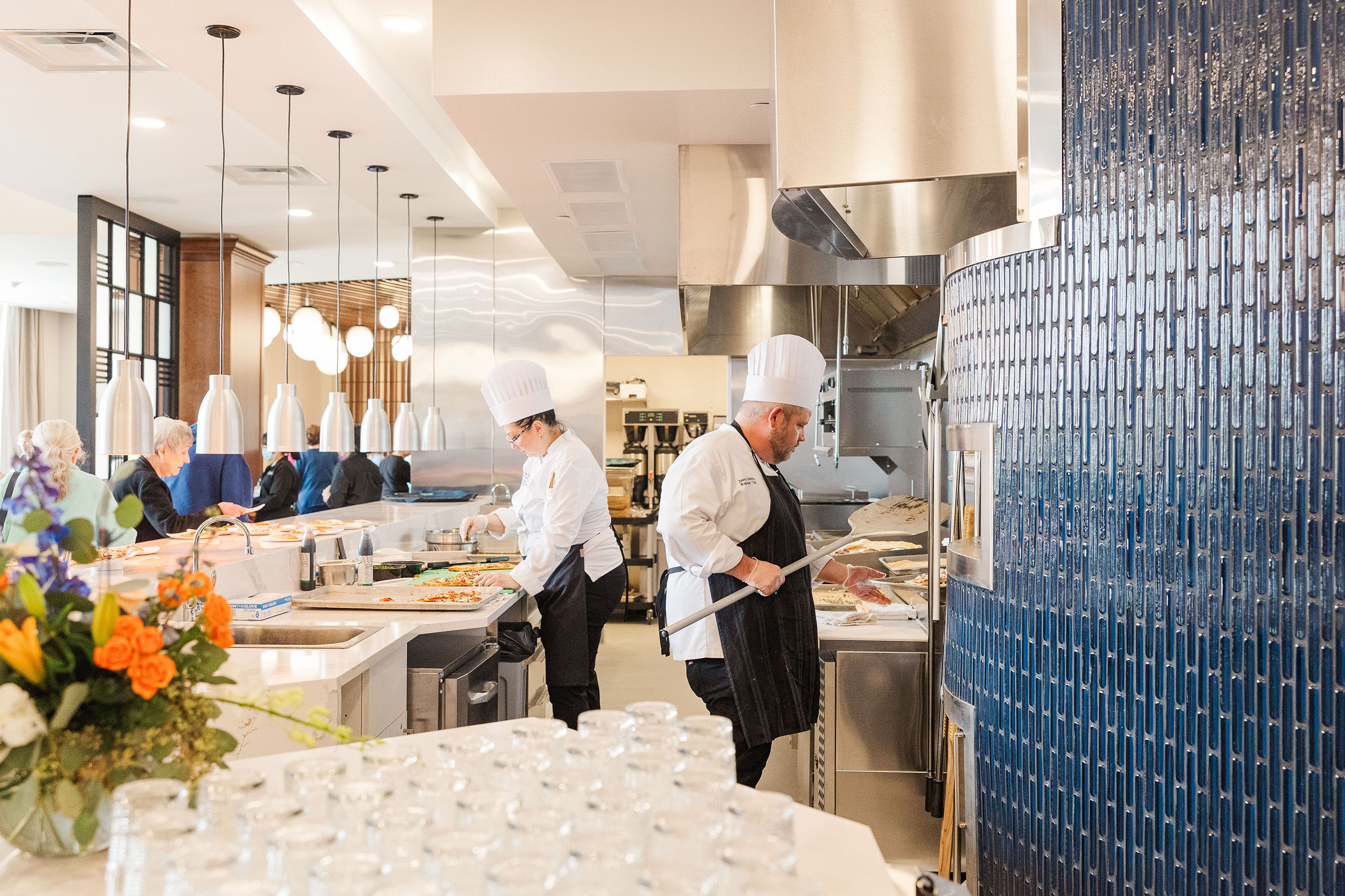
These programs serve a dual purpose. They elevate the dining experience beyond what any resident could design independently at home, making the community a genuine value-add, and they provide consistent social programming that encourages daily engagement.
The Delivery Dilemma: Balancing Flexibility with Community
Perhaps the most nuanced challenge facing senior living operators in the Boomer era is how to respond to residents’ expectation of radical food flexibility while protecting the communal dining culture that is essential to resident health and well-being.
Baby Boomers arrive at senior living communities after decades of on-demand ordering. The expectation of “what I want, when I want it” shaped by DoorDash, Uber Eats, and Grubhub does not disappear at move-in. Nor should it. Addressing this expectation is essential to occupancy and resident satisfaction.
But unchecked, the retreat into in-room dining and third-party delivery can quietly accelerate the very isolation that community living is designed to prevent. The design response, therefore, must be both logistical and cultural.
Designing for To-Go and In-Room Dining
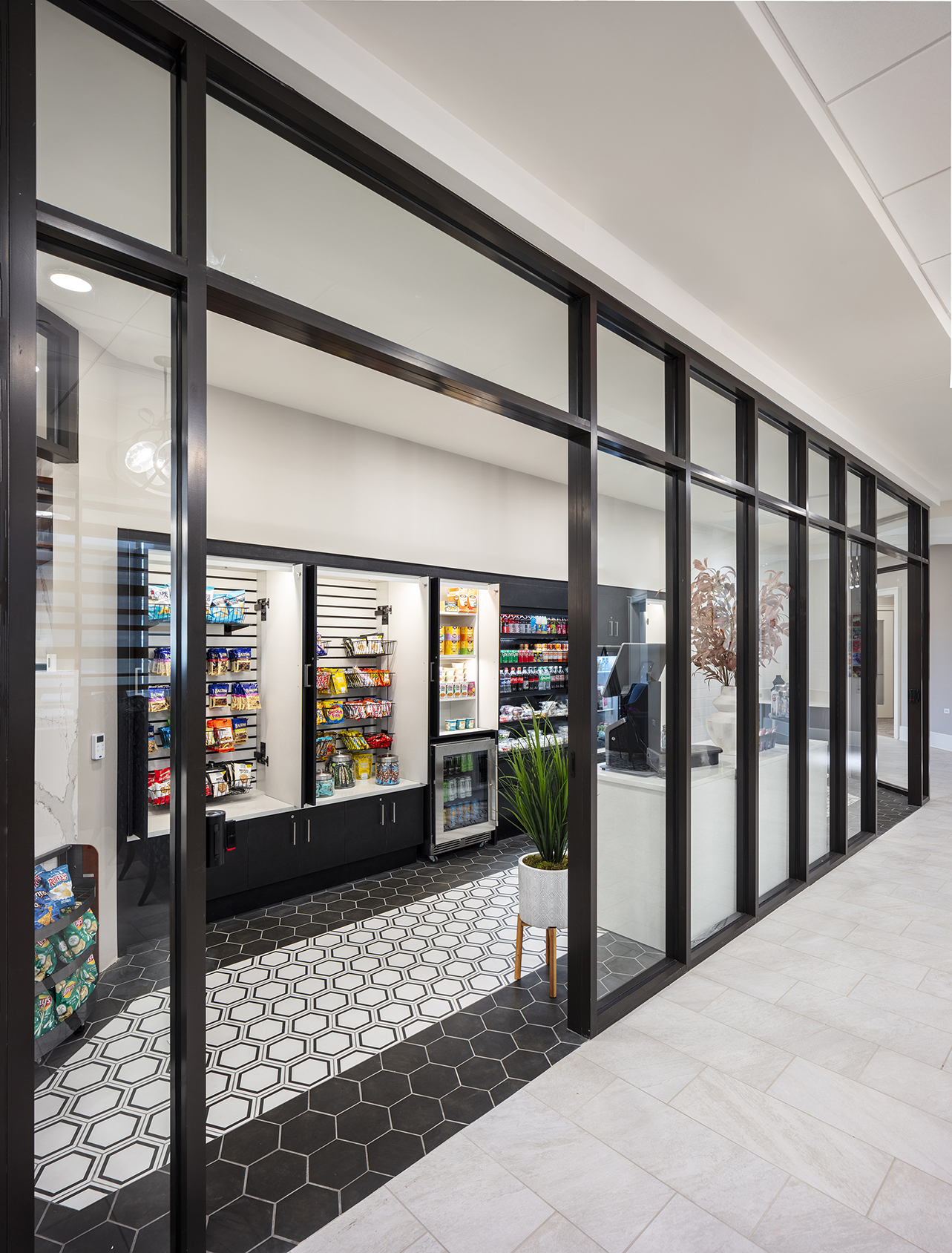
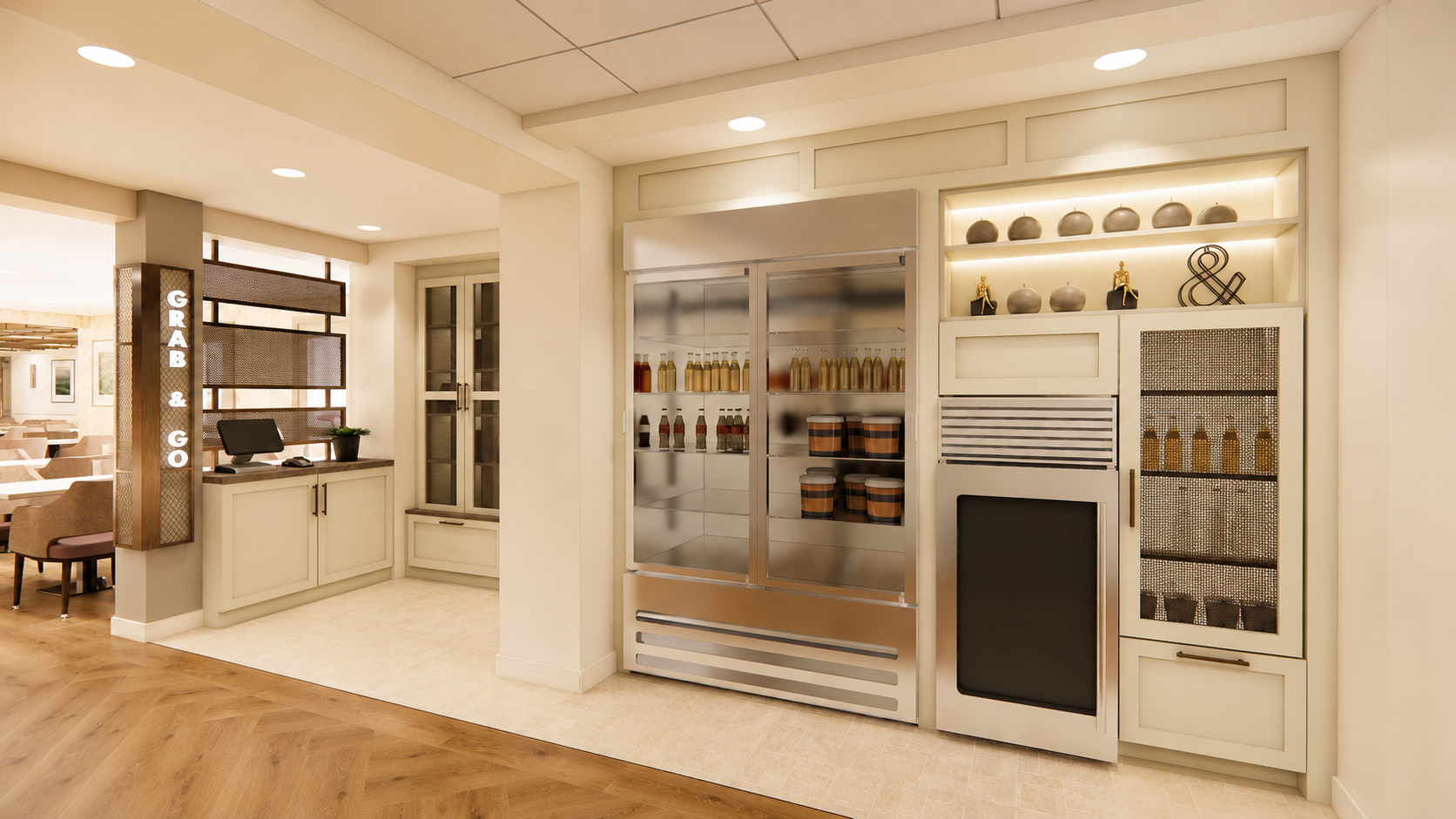
Infrastructure matters. A thoughtful to-go program requires purpose-built physical infrastructure: a designated to-go pick-up area whether a dedicated millwork station, a well-designed pass-through window, or a mobile station near the bistro, that is convenient, dignified, and clearly integrated into the dining flow without disrupting seated service.
Operationally, communities should consider whether to-go service is offered during or outside of primary dining windows. Offering a curated to-go menu before and after main service periods can extend dining revenue hours while reducing the staffing impact during peak periods.
Menu design is equally important. The to-go menu need not mirror the full dining menu. A curated selection of well-packaged, resident-favorite items that hold quality well in transit and creates a compelling offering without overwhelming kitchen operations.
The Grab-and-Go Market: Revenue, Optionality, and Staffing Efficiency
A well-designed grab-and-go market is one of the highest-value-per-square-foot additions a senior living community can make to its dining ecosystem. Drawing directly from the hospitality sector’s lobby market concept, these small-footprint operations, typically 200 to 400 square feet, offer packaged snacks, prepared foods, specialty beverages, personal care items, and household essentials available 24/7.
The benefits are threefold. For residents, the market provides genuine optionality, a midnight snack, a quick breakfast before an early appointment, a bottle of wine for an in-apartment dinner with family. For operators, the market generates additional revenue with minimal staffing impact, as it can operate largely on an honor-system or contactless payment basis outside of staffed hours. And for the overall community, a well-located and beautifully designed market becomes a social waypoint, a place where residents bump into each other, linger over a coffee, and exchange a few words before heading on with their day.
Accommodating Third-Party Delivery: Learning from Multifamily
The senior living industry would do well to look to multifamily housing for its approach to third-party food delivery. Luxury apartment buildings have long grappled with the challenge of after-hours delivery management, food quality in transit and building access security and have developed practical solutions that can translate directly to senior living.
Key design considerations include:
- Dedicated delivery staging areas – A secured, temperature-controlled space (heated lockers for hot food, refrigerated alcoves for cold) near the building entrance where delivery drivers can deposit orders without requiring access to residential floors
- Smart notification systems – Integrated with residents’ phones or community apps to alert them when an order has arrived
- Clear protocols for off-hours deliveries – Communicated to both residents and delivery platforms to reduce disruption to building staff and security
- Staff training on food safety – Ensuring that receiving protocols maintain the integrity of delivered food, particularly for residents with dietary restrictions or health considerations
The goal is not to discourage outside delivery, but to accommodate it with the same design intention and hospitality intelligence applied to every other aspect of the community.
Technology: The Operational Backbone of the Modern Dining Program
Senior living dining is facing a workforce crisis that design alone cannot solve. With annual staff turnover in the senior living sector running at approximately 85% across all positions (6. NIC, via LCS “Unlocking Staffing Success in Senior Living,” 2023), operators are under enormous pressure to deliver elevated, personalized dining experiences with an increasingly constrained labor pool. Technology is stepping in to fill the gap and its implications for both operations and design are significant.
Point-of-Service and Digital Ordering Systems
Digital menu boards and resident-facing ordering platforms, tablets at the table, app-based ordering, or kiosk stations reduce the front-of-house staffing burden while simultaneously improving order accuracy and consistency. For communities serving residents with complex dietary requirements, digital ordering platforms can be integrated with individual nutrition profiles to flag allergens, suggest compliant menu options, and track intake, a powerful tool for both quality of care and personalization.
Operators are implementing AI into their point-of-sale systems to recognize ordering patterns, increase speed, reduce waste, and share data across communities. (7. Senior Housing News, “How Senior Living Operators Are Readying Dining Tech, Tastes for the Boomers,” August 2025)
Robotics: Filling Gaps, Not Replacing People
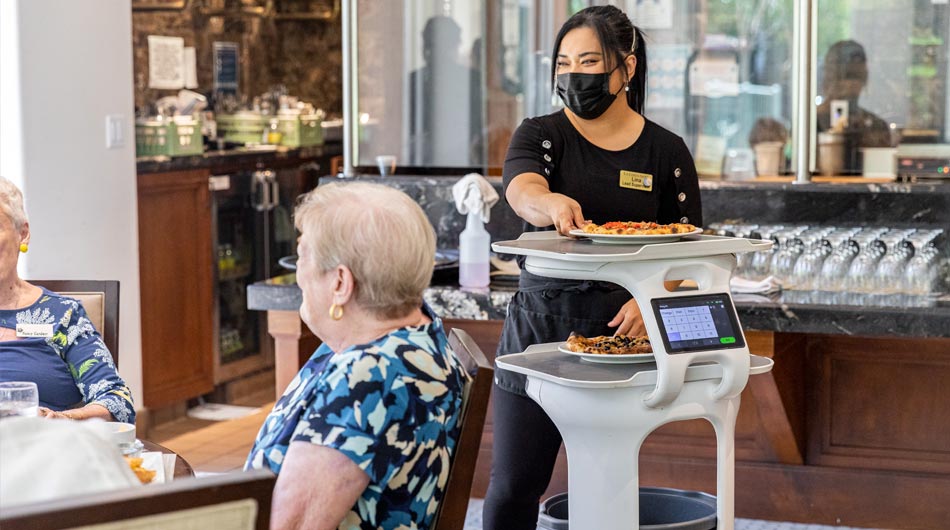
Foodservice robots are gaining traction in senior living communities as a practical response to staffing shortages. The business case is straightforward: a robot can handle food running, bussing, and delivery to tables at a fraction of the cost of a human FTE, operating consistently without sick days or turnover. (8. Direct Supply, “Elevating Senior Living Dining with Foodservice Robots”)
Critically, the deployment of robotics in dining does not diminish the hospitality experience, but when implemented thoughtfully, it can actually enhance it, freeing human staff from the repetitive physical work of running dishes and returning trays so they can focus on meaningful resident interaction. For architects, the implication is clear: kitchen and dining layouts should be planned from the outset with robotic circulation pathways in mind, ensuring adequate aisle widths, clear sight lines, and docking/charging areas integrated into the back-of-house design.
Inventory Management and Waste Reduction
Digital inventory and menu management platforms represent one of the highest-ROI technology investments available to senior living operators. Programs like MealSuite use AI-driven analytics to track ordering trends, manage inventory in real time, reduce food waste, and streamline procurement, helping operators manage food cost inflation while ensuring that personalized dietary preferences are accurately tracked and consistently executed. (10. TimeForge, “5 Ways Tech Innovations Revolutionize Senior Living Dining,” August 2025)
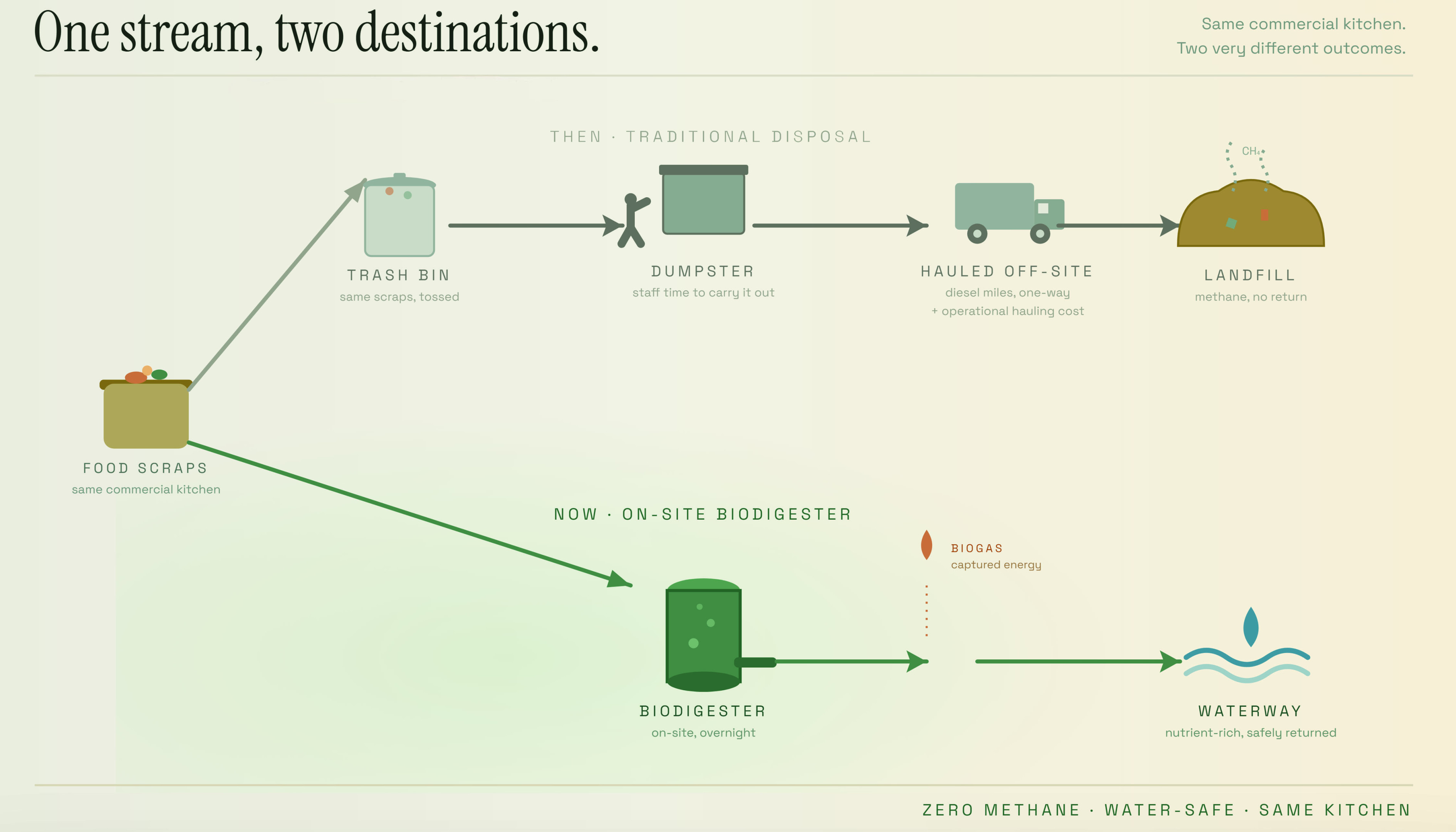
Complementing these digital tools, biodigesters are emerging as an operationally and environmentally significant investment. These on-site machines convert food waste into water that can be safely discharged, eliminating the need for waste transport and dramatically reducing garbage removal costs. In 2020, average U.S. landfill tipping fees ran approximately $53.72 per ton; facilities in high-cost regions pay considerably more. Real-world examples demonstrate a return on investment as fast as two years, and operations have reported cutting food waste management costs in half after installation. (11. Power Knot, “Food Waste Digesters: A Smart Solution for Senior Living,” May 2025) For architects, biodigesters require thoughtful placement within kitchen design, typically in the dish room or utility area, with appropriate drainage, ventilation, and access provisions.
Specialized Kitchen Equipment
The Boomer era demands a back-of-house investment philosophy that matches its front-of-house ambitions. Equipment innovations such as the Unox Evereo, a “hot fridge” that cooks food to perfection and holds it at serving temperature for hours without degrading quality, enable smaller culinary teams to execute consistent, high-quality meals across extended dining windows. This is particularly valuable in communities moving away from single-turn dining toward all-day service models, as it reduces the labor required to cook-to-order at every moment while maintaining quality standards that would satisfy a restaurant critic.
Designing for Hospitality: Lessons from Outside Industries
The most successful senior living dining programs of the next decade will not be designed by looking inward at the industry’s own history. They will be designed by looking outward at what hospitality, multifamily residential, and the food service industry’s most innovative operators have already figured out.


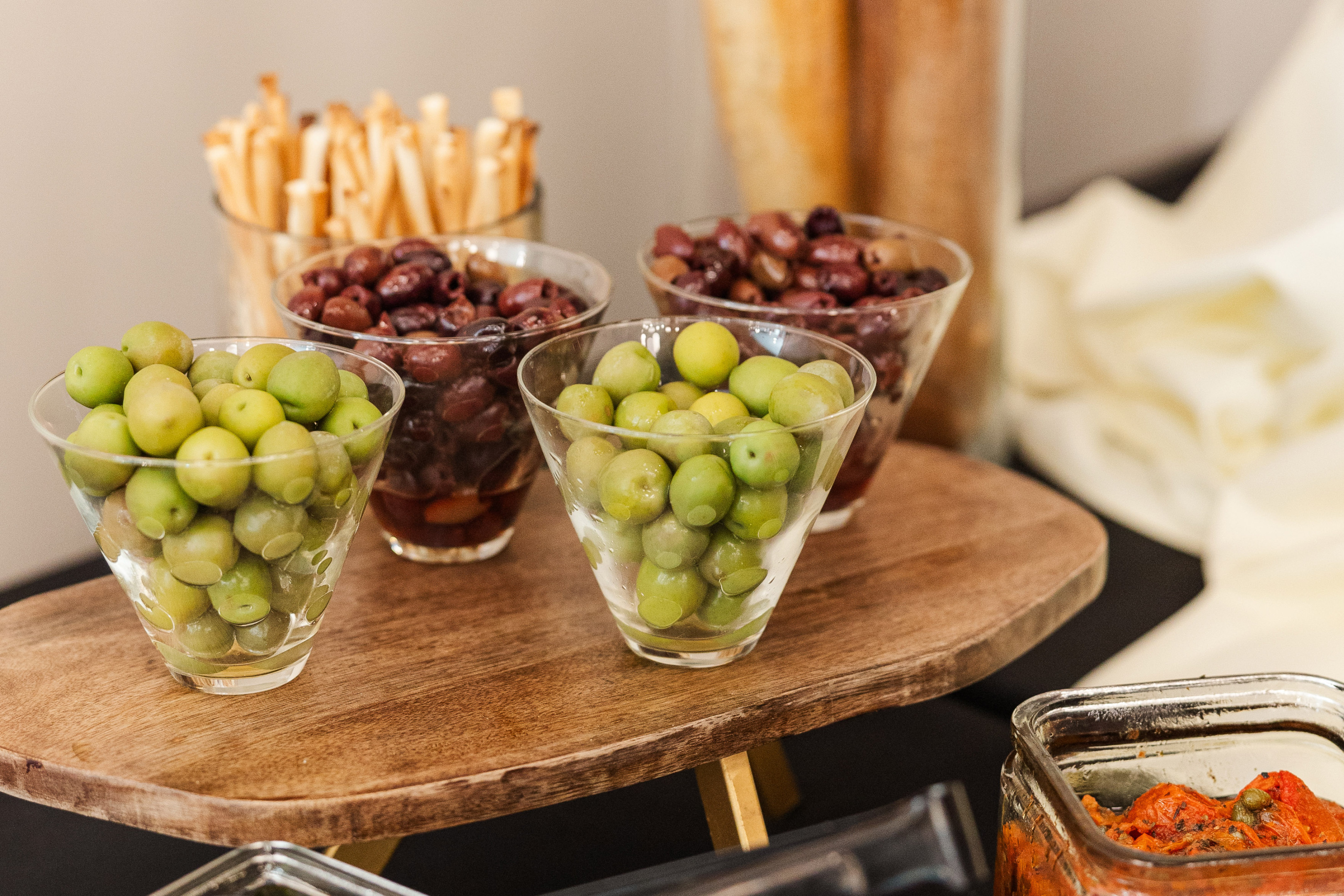
From hospitality: The hotel industry learned long ago that the lobby bar is the community’s living room, a space that generates revenue, activates the building, and creates the first and last impression for every guest. Senior living communities should apply the same principle to their bistro/bar, treating it as a destination unto itself, not merely a supplement to the main dining room. They have also learned how hospitality focused training for staff can make a large impact on the guests’ experiences.
From multifamily: The luxury apartment sector has developed sophisticated approaches to amenity programming providing curated, calendar-driven experiences that give residents a reason to engage beyond their own four walls. The food hall concept, the rooftop barbecue night, the guest chef pop-up all translate powerfully to senior living communities with appropriately scaled execution.
From restaurants: The shift toward experiential dining, where the meal is theater, not just sustenance, has reshaped consumer expectations across every demographic. Chef’s tables, open kitchens, interactive cooking classes, tableside preparation, takeout options, and beverage education programs are now the norm at aspirational casual dining establishments. Senior living communities that want to attract Boomers should aspire to the same standard.
Staff Training and Culinary Culture
No amount of architectural investment will compensate for a dining team that has not been trained to deliver hospitality. The shift from institutional food service to restaurant-caliber dining requires a cultural transformation as much as a physical one.
Staff training must evolve accordingly and investing in front-of-house service skills, beverage knowledge, dietary consultation competencies, and the kind of genuine hospitality mindset that characterizes the best restaurant teams. Leading communities are beginning to recruit talent from the hospitality sector rather than exclusively from institutional food service, and to create culinary cultures where chefs have creative ownership of the menu and take pride in the product they put on the table.
Implications for Design: What Architects and Developers Must Plan For
As SAS Architects works with senior living developers and operators on new communities and repositionings, we are seeing a consistent set of design principles emerge from the convergence of all these trends:
- Plan for multiple, smaller dining venues rather than one large dining room. A community of 150 units might be better served by a 50-seat formal dining room, a 40-seat bistro/bar, a 30-seat casual dining room, a private dining room and a 200-square-foot market than by a single 150-seat dining hall.
- Design the bistro/bar as a day-long destination, with a flexible layout, appropriate acoustics, full beverage service infrastructure, and visual connectivity to outdoor spaces.
- Integrate to-go infrastructure from day one – A dedicated pick-up station, to-go packaging storage, and staff workflow that accounts for the growing volume of in-room dining requests.
- Design for delivery logistics – A secure, temperature-controlled delivery staging area near the main entrance, separate from the primary lobby, with clear wayfinding and staff notification integration.
- Plan for robotic circulation in kitchen and dining layouts, including adequate aisle widths and dedicated docking areas.
- Locate the kitchen to support multi-venue service efficiently, with clear, short paths to each dining space and back-of-house design that can support parallel service across venues.
- Incorporate biodigester space in kitchen utility planning, with drainage, ventilation, and access provisions built in from schematic design.
- Design outdoor dining as a first-class venue, not an afterthought, but a fully weatherproofed, furnished, and programmed extension of the interior dining ecosystem.
Summary
The dining program is no longer a support function of senior living but one of its primary competitive differentiators, and one of its most powerful tools for resident health, satisfaction, and community vitality. Baby Boomers will not accept less than what they have spent a lifetime experiencing: fresh, flavorful, personalized, flexible, and experiential dining delivered with genuine hospitality in spaces that feel alive.
Communities that rise to meet this expectation will fill their buildings, retain their residents, and build reputations that marketing budgets alone could never buy. Those that do not will find themselves increasingly unable to compete for the most financially resourced and discerning generation of seniors in American history.
At SAS Architects & Planners, we partner with senior living developers, operators, and ownership groups to design dining ecosystems that are as strategically sound as they are beautifully executed. From master planning and venue programming to kitchen design and technology integration, we bring the design intelligence, operational insight, and hospitality sensibility that the Boomer era demands.
Ready to rethink your dining program? Reach out to SAS to start a conversation.
Miss part 1 of the Not Your Parents Retirement series – Rethinking Apartment Design for Baby Boomers? Visit this link to catch up.
Referenced Sources:
- Restaura / Age of Majority. “Great Expectations Survey.” BusinessWire, October 28, 2024. https://www.businesswire.com/news/home/20241028264562/en/Survey-By-Restaura-Finds-Boomers%E2%80%99-Plans-to-Age-in-Place-May-Be-Driven-by-What-They-Want-to-Eat
- J.D. Power. “2025 U.S. Senior Living Satisfaction Study.” November 19, 2025. https://www.jdpower.com/business/press-releases/2025-us-senior-living-satisfaction-study
- “Improving Dining Environments Increases Resident Satisfaction.” McKnight’s Long Term Care News. https://www.mcknights.com/marketplace/improving-dining-environments-increases-resident-satisfaction/
- National Academies of Sciences, Engineering, and Medicine. “Social Isolation and Loneliness in Older Adults.” 2020. https://nap.nationalacademies.org/catalog/25663; Johns Hopkins Bloomberg School of Public Health Magazine, “For Healthy Aging, Stay Connected,” May 2024.
- Wilson, Anthony. “Adapting to Changing Consumer Preferences: A Boomer’s Perspective in Senior Living.” National Investment Center (NIC), June 2024. https://www.nic.org/blog/adapting-to-changing-consumer-preferences-a-boomers-perspective-in-senior-living/
- “Unlocking Staffing Success in Senior Living: Retention Strategies that Work.” LCS Blog. https://www.lcsnet.com/news-blogs/news/unlocking-staffing-success-in-senior-living-retention-strategies-that-work
- Senior Housing News. “How Senior Living Operators Are Readying Dining Tech, Tastes for the Boomers.” August 2025. https://seniorhousingnews.com/2025/08/08/how-senior-living-operators-are-readying-dining-tech-tastes-for-the-boomers/
- Direct Supply. “Elevating Senior Living Dining with Foodservice Robots.” https://www.directsupply.com/resources/blogs/robotics-in-healthcare-foodservice
- Food Service Director. “Robot Runners Help Senior-Living Dining Team with Staffing Gaps.” September 2024. https://www.foodservicedirector.com/senior-dining-meals/robot-runners-help-senior-living-dining-team-with-staffing-gaps
- TimeForge. “5 Ways Tech Innovations Revolutionize Senior Living Dining.” August 2025. https://timeforge.com/industry-news/5-ways-tech-innovations-revolutionize-senior-living-dining-including-workforce-management-solutions-for-food-services/
- Power Knot. “Food Waste Digesters: A Smart Solution for Senior Living.” May 2025. https://powerknot.com/2025/03/17/food-waste-digesters-a-smart-solution-for-senior-living/